Biosafety and Biosecurity
What is Biosafety?
UW–Madison laboratories that work with pathogens adhere to strict procedures and safeguards to ensure the safety of workers, the community and the environment. Collectively, these principles and practices are known as biosafety. When properly followed, biosafety practices help prevent accidents that could pose risks to lab workers and others.
Laboratory facilities receive ratings based on their infrastructure and procedures. These ratings, known as Biosafety Levels, or BSLs, determine the minimum biosafety requirements for facilities based on the risk posed by the infectious material being studied.
In the U.S. there are four basic BSLs, ranging from BSL-1 to BSL-4, with BSL-4 being the highest biosafety level. At UW–Madison, the majority of labs conducting pathogen research work at BSL-2, with a smaller number working at BSL-3. There are no BSL-4 labs on the UW–Madison campus.
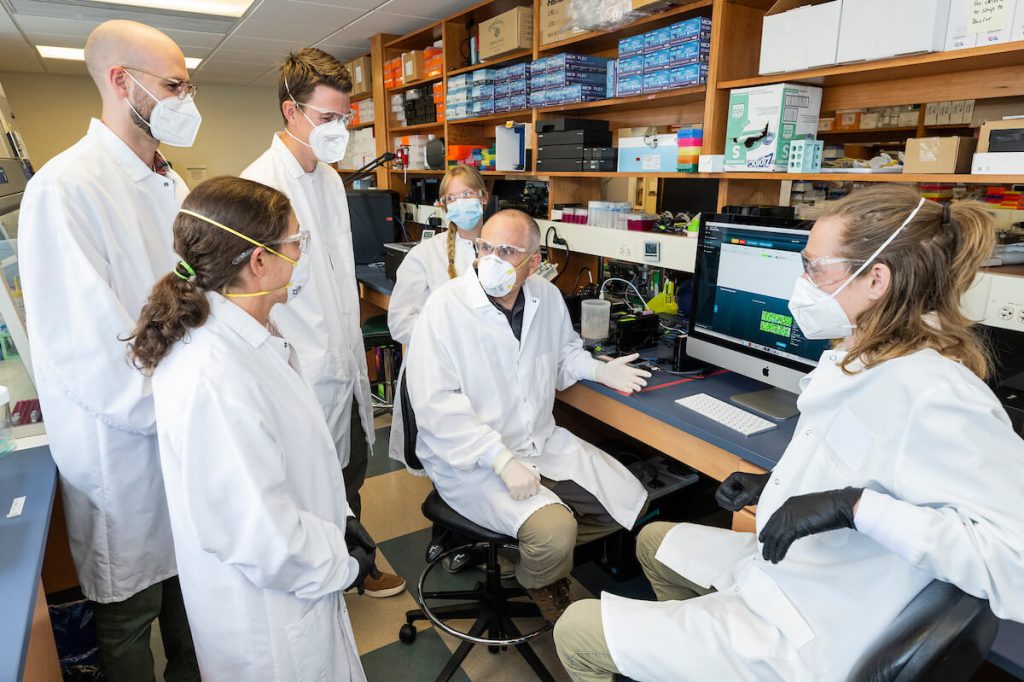
Biosafety Laboratory Requirements
- Training
- Personal protective equipment (e.g., masks, gloves, safety glasses, lab coats, gowns, personal respirators)
- Engineering controls (e.g., safety equipment including biosafety cabinets and HEPA filters)
- Facility design, including barriers, ventilation and waste management
- Standardized procedures for handling pathogens, chemicals and other dangerous materials.
What is Biosecurity?
Laboratories on the UW–Madison campus where pathogen research takes place must not only provide a safe environment for conducting research, but also be secure from threats posed by loss, theft or misuse of the infectious materials. Principles and procedures that help protect pathogens from misuse are referred to as biosecurity.
Biosecurity limits access to the facilities where pathogen research takes place, as well as to research materials and information. It complements biosafety practices to ensure the research can be conducted safely.
In addition to basic biosecurity principles, certain pathogen research requires additional security review. This includes research with federal Select Agent pathogens, as well as research that could be misapplied to pose a threat to public health, the food supply and/or national security (known as dual use research of concern, or DURC).
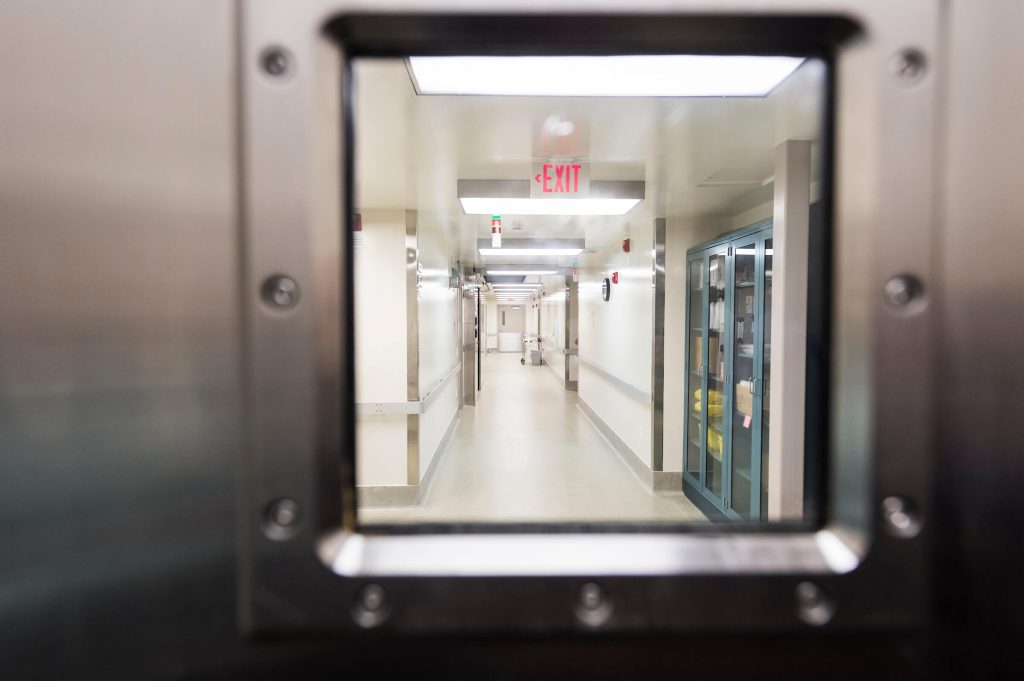
Biosecurity Requirements
- Determining suitability of lab staff prior to authorizing work with certain materials
- Establishing physical security of the facilities where pathogens are housed, as well as of sensitive experimental data and other documentation
- Providing information security, including cybersecurity and protection of digital data
- Working with law enforcement to conduct security risk assessments, or background checks, of staff working with certain high-risk materials or information.
Biosafety and Biosecurity in Action
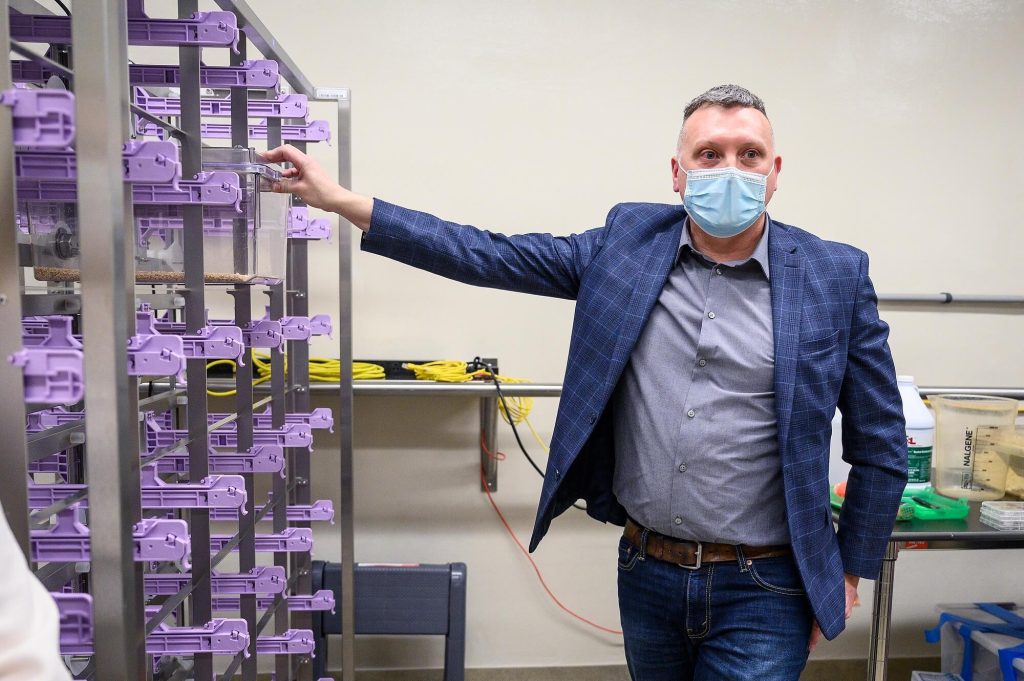
Animal housing structures
Peter Halfmann, associate research professor of virology in the School of Veterinary Medicine, shows a HEPA filtered ventilated cage rack that is used to house animals during a tour of the Influenza Research Institute at UW–Madison. The high-security research facility was closed down for annual decontamination, cleaning and maintenance. Photo: Althea Dotzour
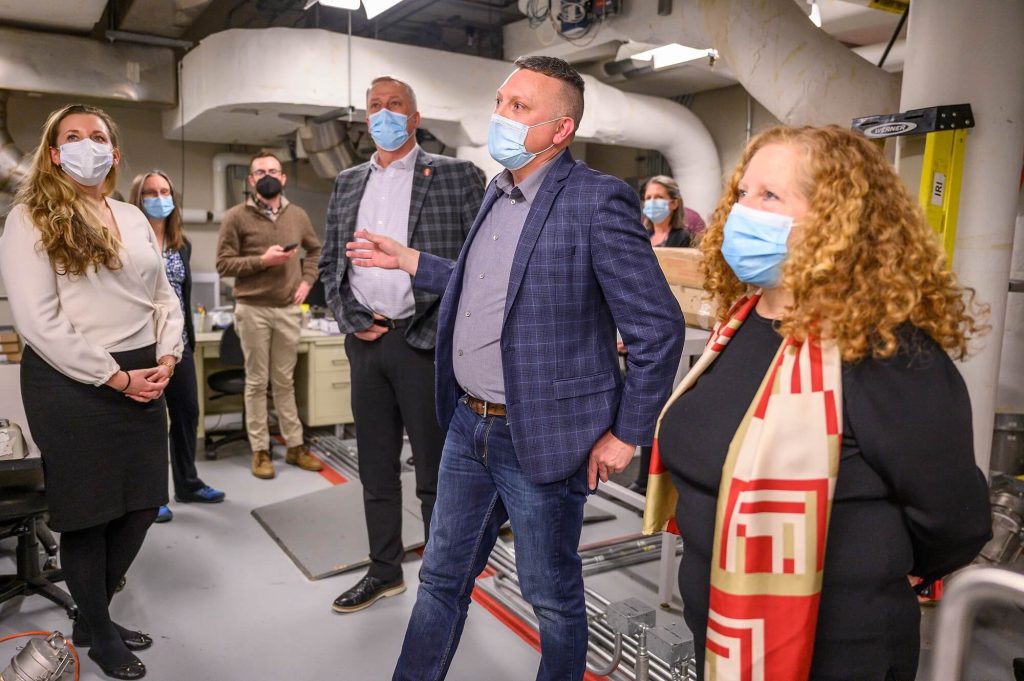
Mechanical room at the Influenza Research Institute
Second from right, Peter Halfmann describes the safety features and equipment redundancies in a mechanical room during a tour of the Influenza Research Institute at UW–Madison. Photo: Althea Dotzour
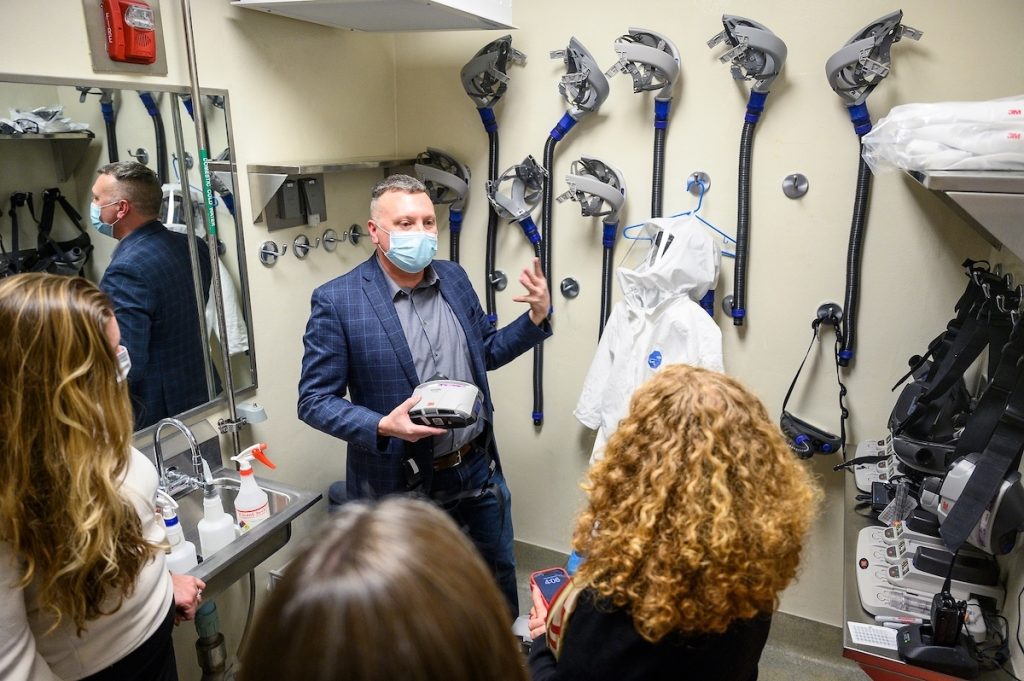
Biosafety suit and breathing equipment
At center, Peter Halfmann shows a biosafety suit and PAPR (powered air purifying respirator) during a tour of the Influenza Research Institute. Photo: Althea Dotzour
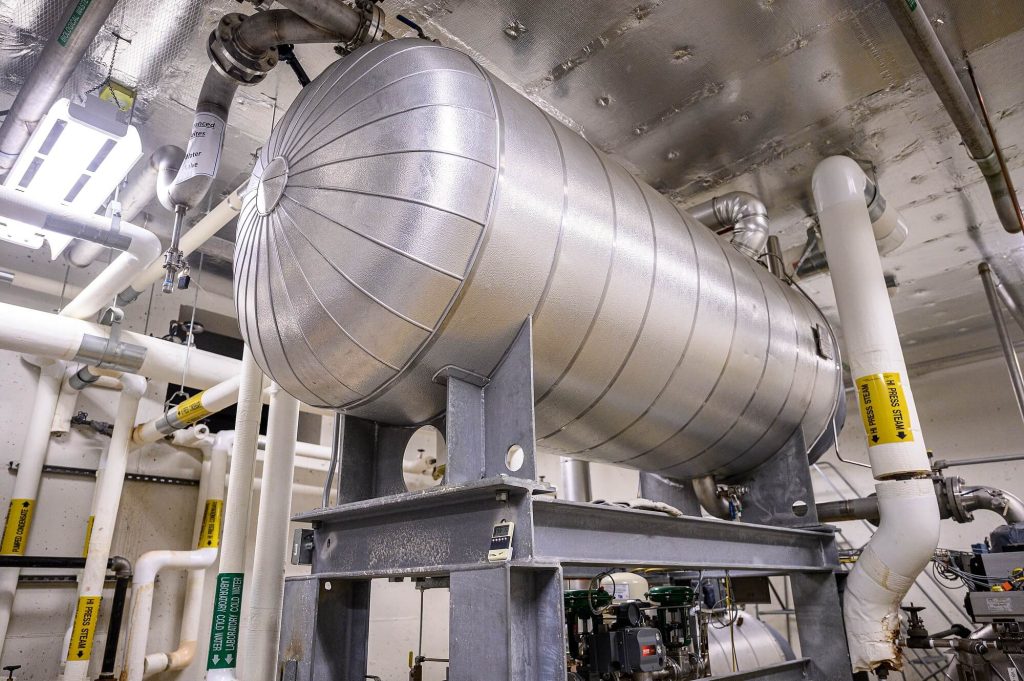
System to decontaminate wastewater
A mechanical system designed to decontaminate wastewater is pictured during a tour of the Influenza Research Institute. Photo: Althea Dotzour
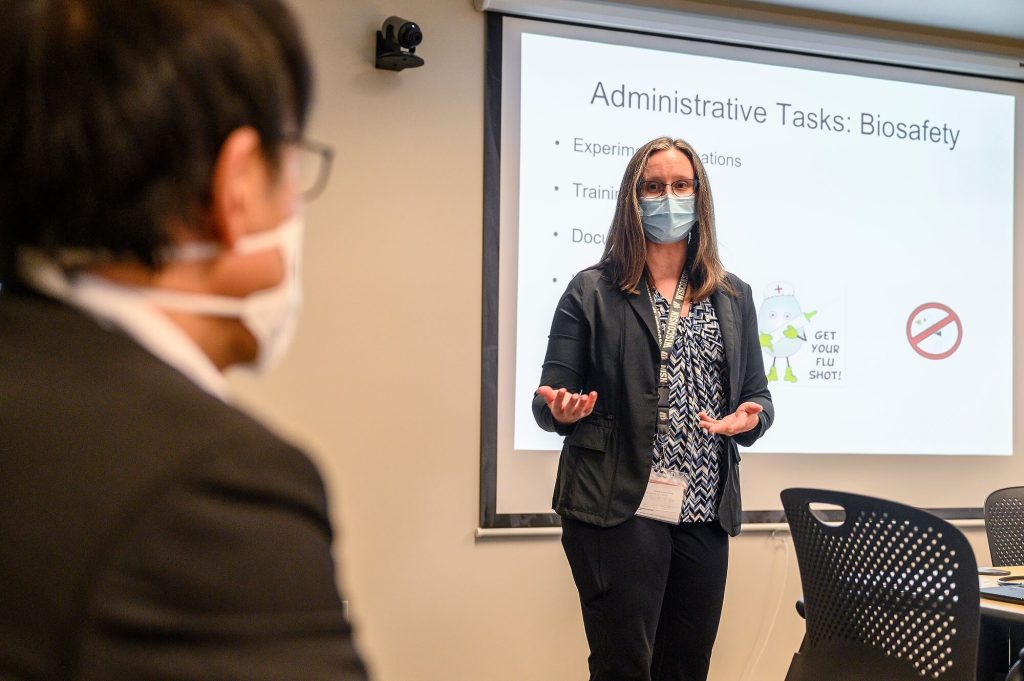
Christina Pier presentation
Christina Pier, select agent responsible official and institutional contact for dual use research, gives a presentation during a tour of the Influenza Research Institute. Photo: Althea Dotzour
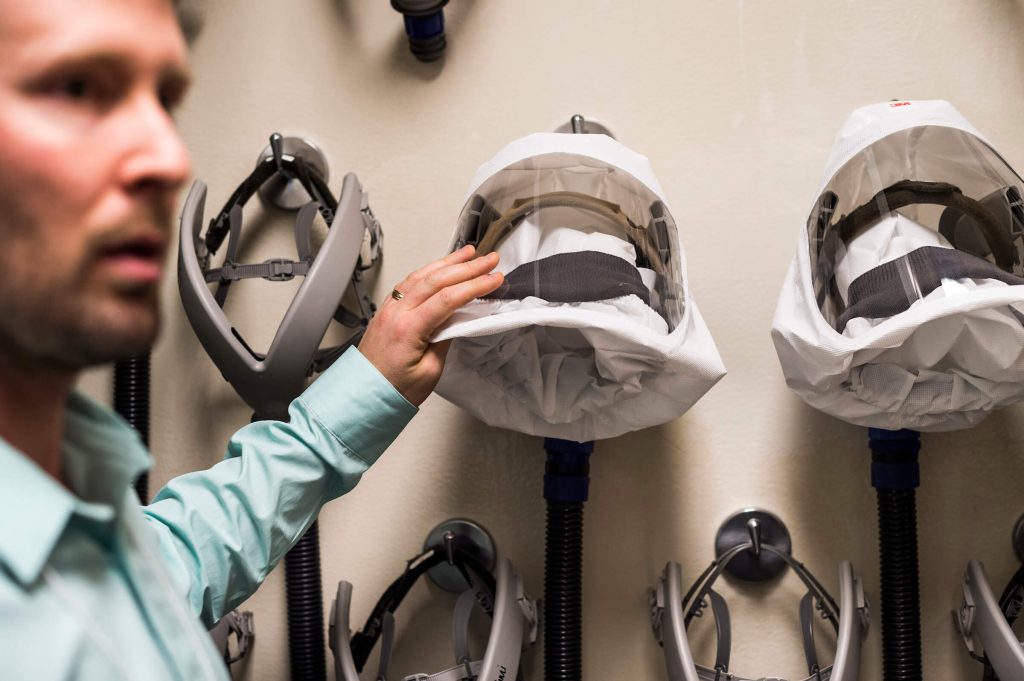
Personal protective equipment breathing system
During a tour of the Influenza Research Institute, Zac Najacht, lab operations manager at the Influenza Research Institute, describes to visiting media representatives the breathing system of personal protective equipment typically worn by researchers. Photo: Jeff Miller
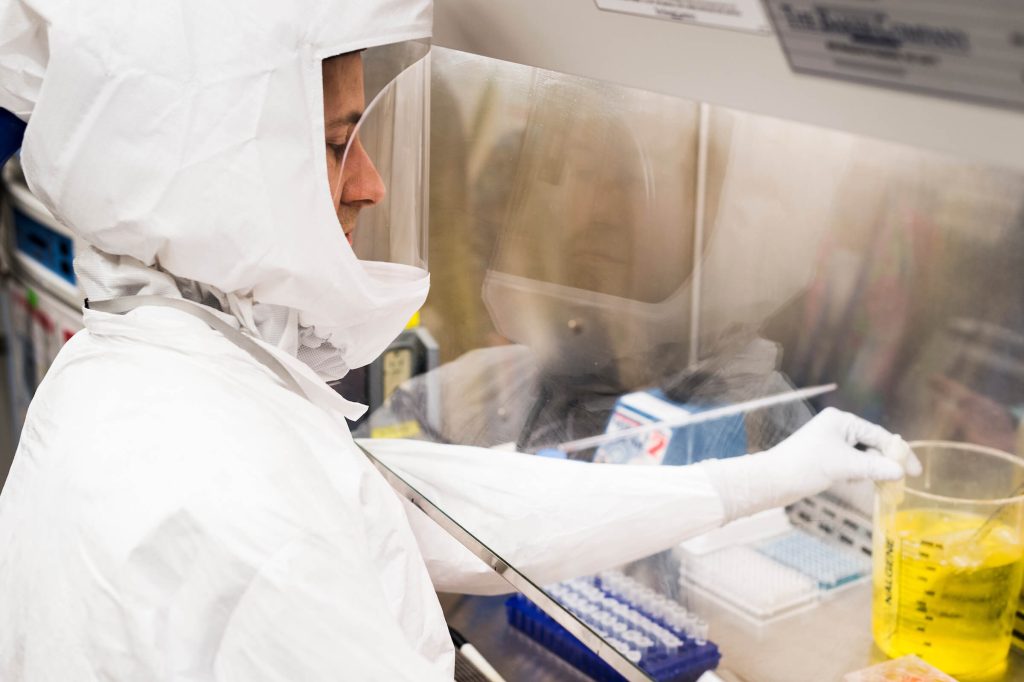
Biosafety practices demonstration
Dressed in personal protective equipment with an integrated breathing system, a researcher demonstrates proper biosafety practices in the lab for a group of media representatives touring the Influenza Research Institute. Photo: Jeff Miller
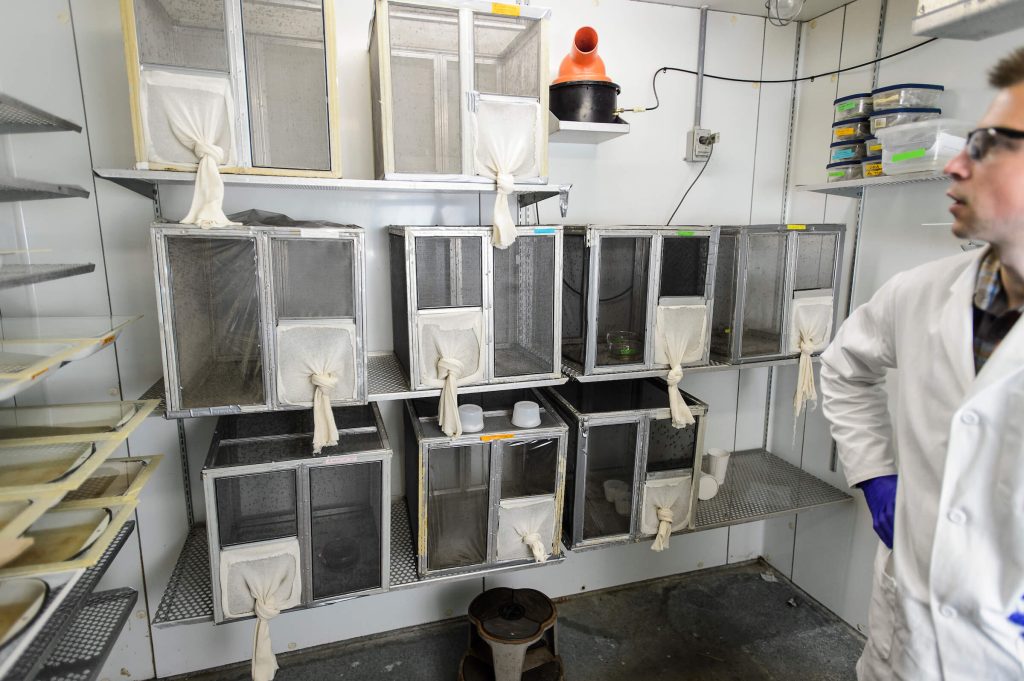
Mosquito-borne pathogen research
Matthew Aliota, assistant scientist in the Department of Pathobiological Sciences in the School of Veterinary Medicine, works with a strain of Aedes aegypti mosquitoes stored in a research lab insectary in the Hanson Biomedical Sciences Building at UW–Madison. Aliota is an expert on mosquito-borne pathogens such as the Zika virus, dengue fever and yellow fever infections. Photo: Jeff Miller